

6 Great Train Rides Around Argentina
Take in the natural and urban landscapes of the country on scenic railway trips

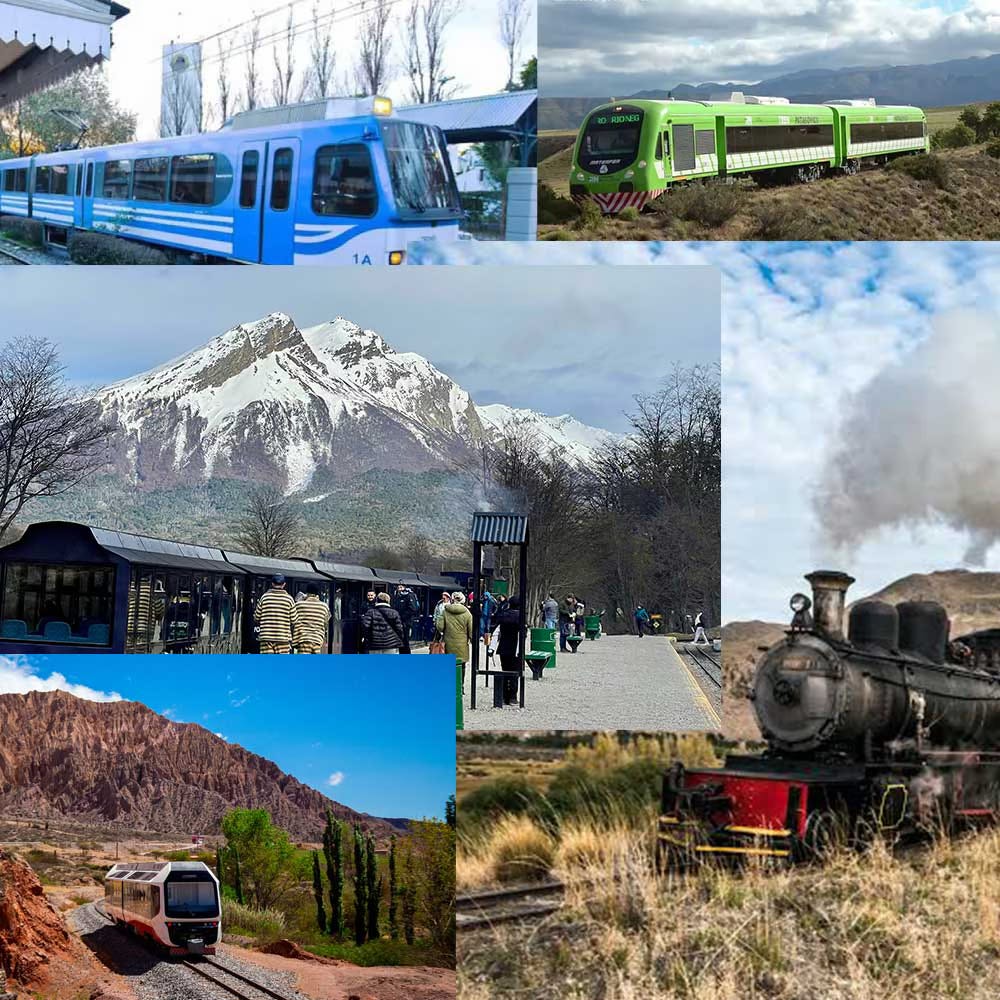
Argentina’s railways once bound together a vast, fast-growing nation. Built in the 19th century with strong British backing, the network hit its peak in the 1940s, expanding to around 45,000 kilometers (28,000 miles). It helped drive agricultural exports by linking remote rural regions to key ports, shaping the country’s rapid economic rise. The expansion of highways and long-distance bus travel gradually sidelined the rail industry, leaving several lines and stations abandoned. Today, only about 15,000 kilometers (9,300 miles) remain, with fewer than 5,000 (3,100) dedicated to passenger services.
But things are slowly shifting. Stations are being refurbished, routes are reopening, and interest in rail is creeping back. It’s not the fastest way to travel, but it’s quite often cheaper than the bus, and far more memorable. A handful of routes still deliver something other modes simply can’t: cinematic journeys through salt flats, high-altitude deserts, Andean valleys, and snow-dusted landscapes.
1. Tren Patagónico (Río Negro)
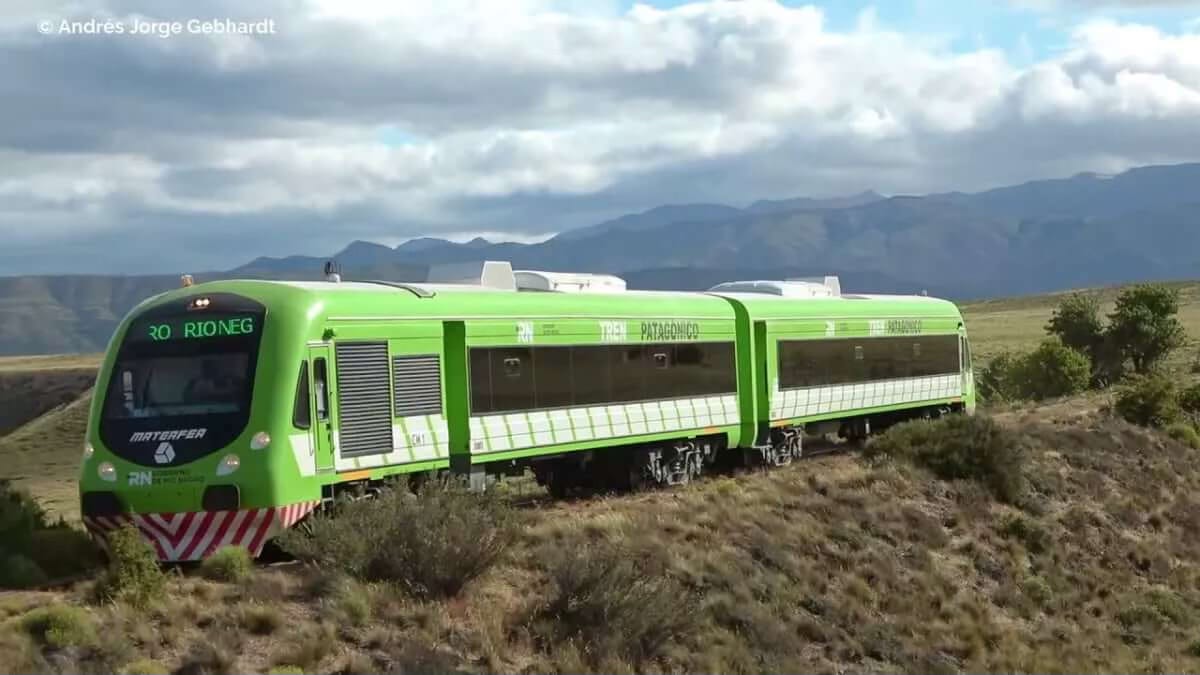
Crossing the wild heart of northern Patagonia, the Tren Patagónico trundles between Viedma and San Carlos de Bariloche. It travels the entire width of Río Negro Province, from the Atlantic coast to the Andean foothills. This is (currently) Patagonia’s last true long-distance train, and easily one of Argentina’s most atmospheric. First constructed to connect remote communities, today it remains a vital link as well as a tourist route that often feels a long way from anywhere.
For a large part of the journey, the scenery remains the same for hours: think the arid Patagonian steppe of vast, empty plains and endless blue skies. Sharp-eyed riders will enjoy the occasional sightings of guanacos, rheas or even pumas. Ghost towns stand abandoned since the 1990s, while brief stops at towns like Ingeniero Jacobacci and Maquinchao offer a glimpse into life in these remote outposts. As the train travels slowly west, the landscape shifts, with lakes, forests and snow-dusted peaks of the Andes coming into view as you gradually approach Bariloche.
Onboard, there’s a choice of classes, including pullman seats and sleeper options. A dining car serves breakfast and dinner, while helping to keep the trip social with the chance to chat with other passengers. Services depart twice a week: Friday at 5pm from Viedma and Sunday at 5pm from Barlichoce. And with locals relying on it as much as tourists, places fill up fast, making advance (sometimes months ahead) bookings essential.
Start/end stations: Viedma to Bariloche
Distance: 827 kilometres (514 miles)
Duration: Around 18 hours
Ticket price: Residents from $70,740 and tourists from $84,996
2. La Trochita (Chubut)
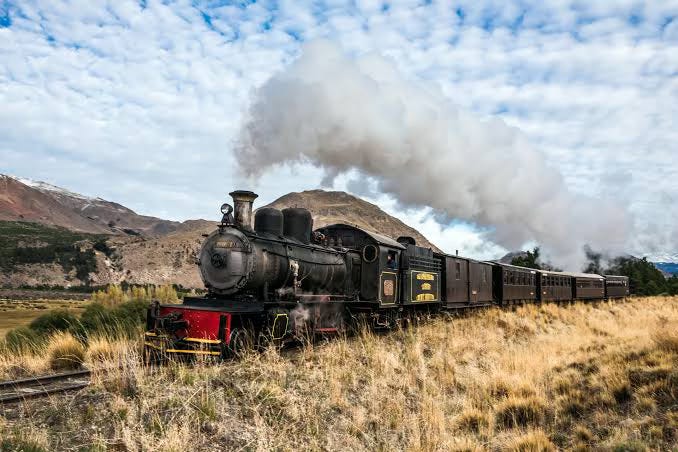
If you don’t have time for the full east-to-west journey across Río Negro, there’s a shorter window into the Patagonian steppe in Chubut Province. La Trochita (or the Viejo Expreso Patagónico) is a historic narrow-gauge steam train, still running with its original 1920s locomotives and wooden carriages. Like the Tren Patagónico, it was built to serve remote settlements and haul freight, arriving in Esquel in 1945 after linking up with the line from Ingeniero Jacobacci. Since the 1990s, it’s been preserved as a heritage experience.
The ride itself is relatively short, but it delivers a strong sense of Patagonia’s scale, pairing a storybook railway with wide, open landscapes and small rural communities. Before boarding, the Museo Ferrocarril offers context on the line’s history, and, in Nahuelpan, the Museo de Culturas Originarias Patagónicas explores indigenous Mapuche and Tehuelche culture. While the engine prepares for the return, browse artisan stalls or pick up some torta frita (Argentine fried bread).
Departures operate year-round, including during snow-covered winter months, but vary by season. In summer it typically operates on Tuesday, Thursday and Saturday mornings. And there’s a less frequent route between El Maitén and Ingeniero Bruno Thomae.
Start/end stations: Esquel to Nahuelpan
Distance: 18 kilometres (12 miles) each way
Duration: Three hours
Ticket price: Tourists $136,000, residents $78,000, students $58,000
3. El Tren del Fin del Mundo (Tierra del Fuego)
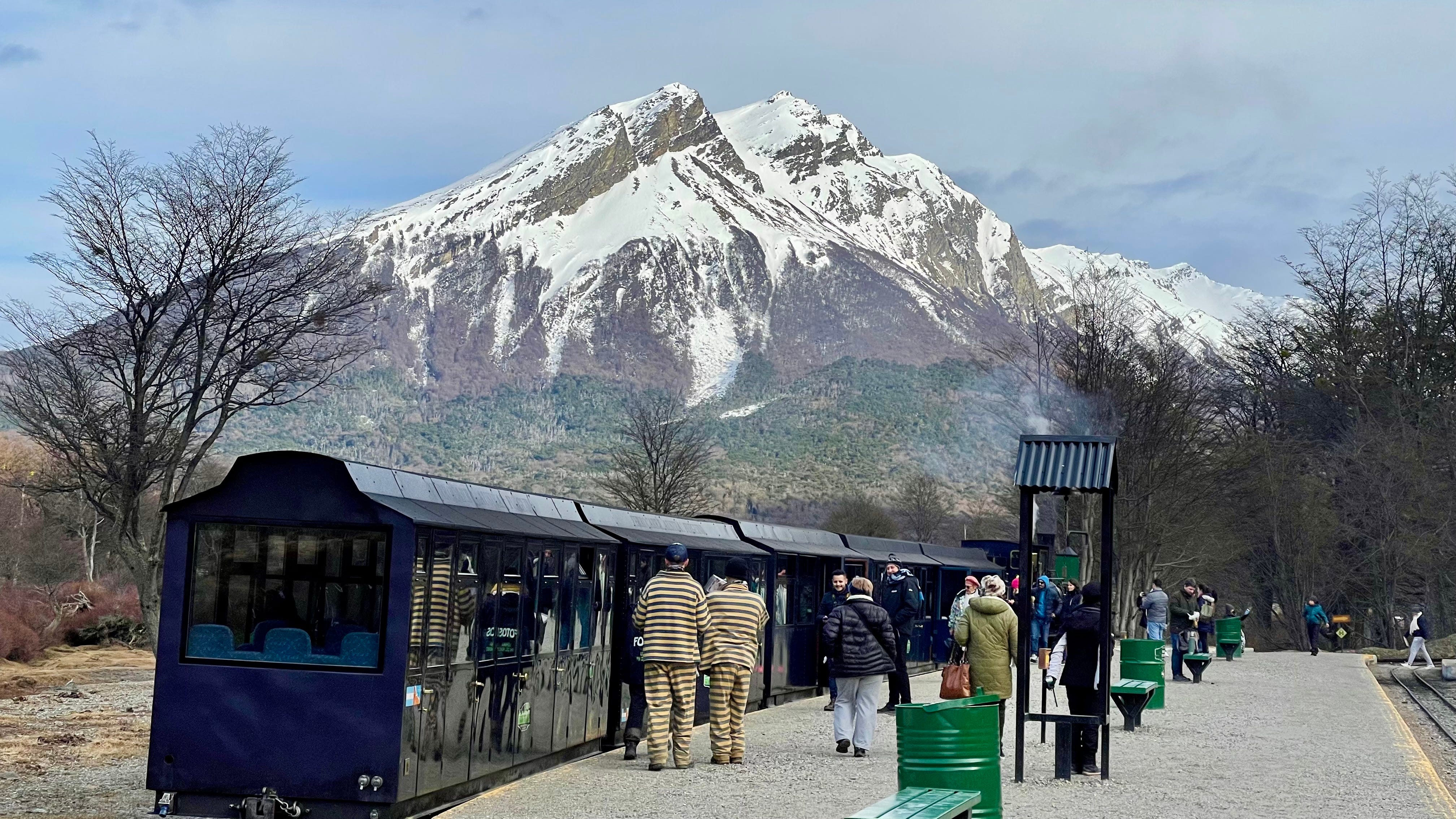
At the bottom of Argentina, Ushuaia is widely regarded as the world’s southernmost city (just don’t tell the people of Puerto Williams, Chile). It lays claim to many of the southernmost tourist attractions, including the scenic El Tren del Fin del Mundo. Built in the early 1900s, it was primarily used to transport inmates from the city’s prison into nearby forests, where they were forced to cut and collect timber. Decommissioned in 1947 following the closure of the prison, it was recovered in the 1990s, creating a heritage railway that preserves both the route and history.
The journey to the end of the world begins about eight kilometres (five miles) from the city centre, and covers the last seven kilometres (4.3 miles) of the original route. It loosely follows the Pipo River into Tierra del Fuego National Park, passing lenga forests and peat bogs. You’ll cross the Puente Quemado bridge and glimpse the Cementerio de Árboles (Tree Cemetery), where fallen trees are reminders of prisoner hardship. There’s also a stop to visit Macarena’s Waterfall, before continuing into the national park.
Two ticket categories onboard the steam locomotive offer their own individual experience, both being accompanied by an audio guide (in nine languages, no less). Tourist class is ticket only with rows of three seats and views out of large windows. Meanwhile, Premium class comes with priority boarding, heated carriages, food and souvenirs.
Start/end stations: Estación del Fin del Mundo to Estación Parque Nacional Tierra del Fuego
Distance: Seven kilometres (4.3 miles)
Duration: One hour and 45 minutes (one way)
Ticket price: Adults from $65,000, and children from $32,500
4. Tren Solar de la Quebrada (Jujuy)
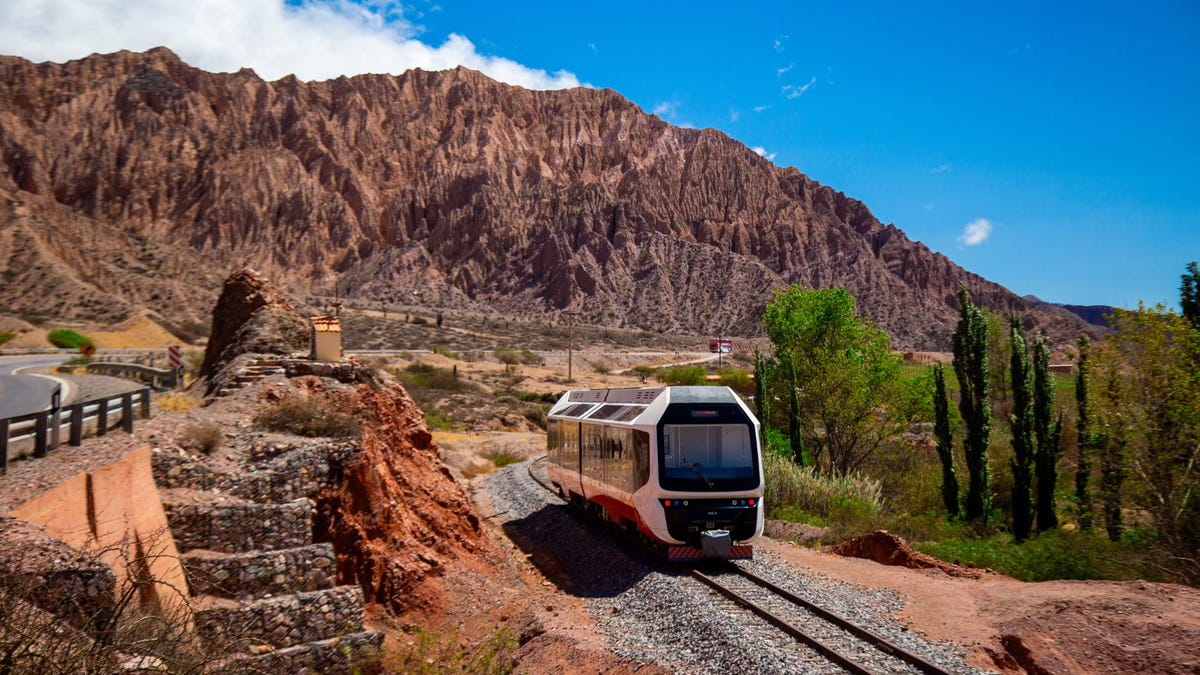
If you’re after a train journey that combines otherworldly scenery with environmentally friendly travel, this one is for you. Jujuy Province’s UNESCO-listed Quebrada de Humahuaca is one of Argentina’s most visually striking landscapes, and it’s now easier to explore thanks to the Tren Solar. This is the first solar-powered train in Latin America, designed to make full use of the region’s endless sunshine.
The railway links traditional Andean villages such as Purmamarca and Maimará, gliding almost silently through mountains, valleys, and rivers carved into the arid terrain. Along the way, orange-hued adobe houses cling to the hillsides, while layered rock formations shift between reds, purples, and ochres depending on the light. It’s all visible from cushioned seats and huge windows.
You can choose between two experiences. The Experiencia 180 is a return journey from Purmamarca to either Maimará or Volcán, with a short stop for coffee along the way. Maimará is especially known for its hillside cemetery overlooking the valley. The Experiencia 360 is a full-day, circular route from Volcán, giving a more immersive tour of the gorge. It includes extended stops in Purmamarca, famous for its Cerro de los Siete Colores (Hill of Seven Colors), and Tilcara, known for its carnival and handcrafts, Both services run two departure times a day.
Start/end stations: Volcán to Tilcara
Distance: 42 kilometres (26 miles)
Duration: From 90 minutes to 10 hours
Ticket price: Experiencia 180: $37,000. Experiencia 360: $69,000, or with bus transfer from Jujuy $102,000 and from Salta $119,000.
5. Tren a Los Nubes (Salta)
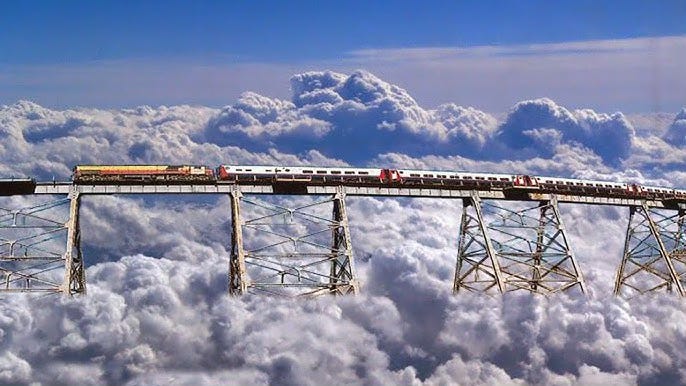
Climbing into the remote, high-altitude plateau of the Argentine Puna, the Tren a los Nubes is one of the world’s highest altitude railway journeys. It’s part of a former trans-Andean railway built in the early 20th century to connect Salta with Antofagasta, Chile. The line’s spirals, zigzags, and viaducts, some of which remain as remarkable engineering feats, were designed to overcome extreme altitude without rack rails.
This is a trip best experienced on a combined bus-and-train tour. Starting in Salta, buses take you along Ruta 51 with scheduled stops at panoramic viewpoints. You’ll break in the gaucho town of Campo Quijano, locally known as the Gateway to the Andes. From here, the journey passes through Quebrada del Toro to San Antonio de los Cobre. Gazing out of the window you can spot multicoloured hills, giant cacti and remnants of the old railtracks.
San Antonio de Cobres is the departure point for the train ride into the stark beauty of Argentina’s Northern Andes. The highlight is the crossing of the Viaducto La Polvorilla, a soaring steel bridge at over 4,200 metres (13,780 feet) above sea level, where the train appears to float above a vast, empty landscape. It crosses at snail’s pace, allowing time to take photographs and appreciate both the natural and engineering beauty.
After returning to the train station, buses take you back to Salta via Santa Rosa de Tastil. It’s a town on a historic Inca-built road called Qhapaq Ñan. There’s time to visit a museum with exhibits about the Ruins of Tastil archaeological site. The full day begins at 7am, returning to Salta at 8.30pm, with departures Tuesday to Saturday. Guides are onboard the train, and oxygen masks are available to help with altitude sickness.
Start/end stations: San Antonio de Cobres to Viaducto la Polvorilla
Duration: Train 60 minutes
Ticket price: Residents $128,000 or $196,000 (including bus), tourists: $155,000 or $218,000 (including bus). Discounts for children aged three to 12
6. Tren de la Costa (Buenos Aires)
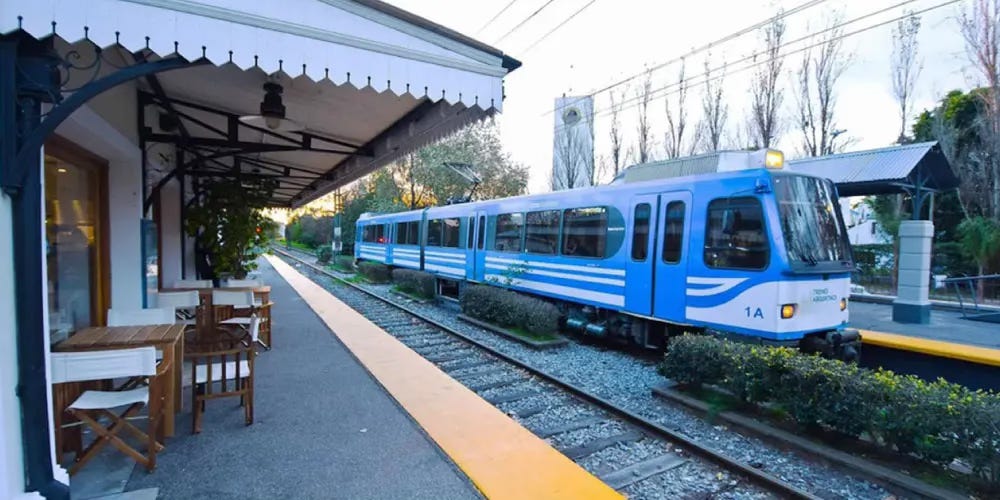
Finally, for a window into life in Greater Buenos Aires’ affluent Zona Norte (Northern Suburbs), jump on the Tren de la Costa. This light rail service connects 11 traditional railway terminals between the municipalities of Vicente López, San Isidro, San Fernando and Tigre. Once a commuter and freight line, it was reopened in 1995 as a tourist attraction aimed at both locals and visitors to the city.
From Av. Maipú station in Vicente López, the train traces the edge of Río de la Plata and Río Luján, passing urban landscapes, leafy streets and parks on its way to the Tigre Delta. The beauty isn’t so much in the natural landscapes, but the ability to alight at stations to experience townlife. Juan Anchorena station is a short walk from riverside parks, while Las Barrancas offers easy access to the bird-rich Parque Natural Municipal Ribera Norte. Las Barrancas also has a well-known weekend antiques market on the station platform, Feria del Anticuario.
Whether you take a thru ride or jump on and off, the line ends at Tigre’s Delta station. Here you can while away some hours wandering the Puerto de Frutos flea market for handmade home decor and furniture, or take boat rides around the rivers and wetlands. Trains run everyday from as early as 6.20am and as late as 10.55pm. If you’re coming from central BA, you can catch a Linea Mitre train from Retiro to Bartolomé Mitre station, then walk five minutes to Av. Maipú. Similarly, for a more direct return to the city, take the same line from Tigre for a 40-minute ride into Retiro.
Start/end stations: Av. Maipú to Delta
Distance: 15.5 kilometres (9.6 miles)
Duration: 25 minutes
Ticket price: Section 1: Sube $280 / Cash $900. Section 2: Sube $360 / Cash $900